


The Moral Gravity of Trust and Righteousness
The Measure of a Promise
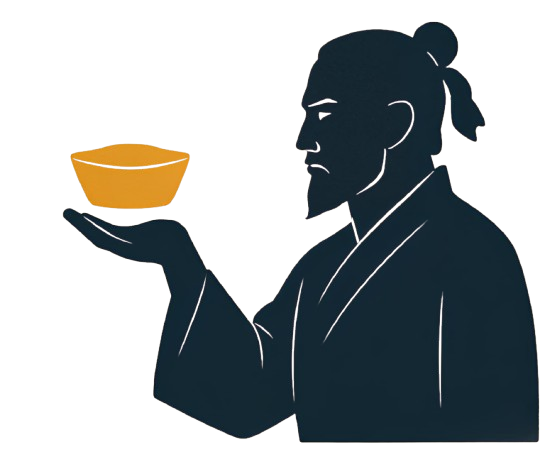
The idiom “A Promise Worth a Thousand in Gold” is associated with General Ji Bu of the early Han period. In Records of the Grand Historian, he is placed within the chaos of the Chu–Han conflict, serving as a crucial commander under Xiang Yu. It was an age in which the situation could change in the blink of an eye; beyond the battlefield, however, a single sentence from Ji could set minds at ease, because he never promised lightly, and he never broke his word. In this way his name travelled through the lands of Chu: this was a man you could trust.
After Xiang Yu was defeated, Liu Bang founded the Han dynasty and issued an order to seize Ji Bu. A reward of a thousand in gold was posted for his capture, and the proclamation carried a colder edge still: “Whoever dares to shelter him shall have the crime visited upon three branches of their kin.” The hunt was harsh enough to feel like a net tightening around every doorway.
Yet, to the astonishment of many, there were still those who helped him in secret: sheltering him, moving him on, sharing what little safety they had, simply because they admired his moral character, and revered the integrity by which he had lived.
They did so for one central reason: Ji Bu, over many years, had kept faith and valued his commitments, and he was worth protecting. Those willing to step forward at the most dangerous moment became the most truthful source of his renown, not flattery, and not the pull of power, but the steadiness and courage forged from promises he had honoured, one by one.
Thus A Promise Worth a Thousand in Gold ceased to be merely a description of Ji Bu. It became the legacy his life left behind: words need not be many, but once spoken, they must be carried through; promises need not be grand, but they must have something solid beneath them. Such a person is especially precious in chaotic times, and in later ages became a byword for integrity.
When Eloquence Knocks: A Silver-Tongued Debater Seeks Ji Bu
In Chu there lived Cao Qiusheng, a debater famed for quick wit and a ready tongue. He had long been adept at weaving networks through power and money, moving in and out of aristocratic circles; among those he frequented, none was closer to him than Dou Changjun.
Hearing that Cao was clever to the point of cunning, yet thin in sincerity, Ji Bu wrote to Dou with a pointed caution: “Cao is not a man of upright moral character. You would do best not to bind yourself to him in close friendship.”
Later, when Cao returned to his home region and learned that Ji Bu’s name was rising, he sought to seize the moment and attach himself to that renown. He asked Dou for a letter of introduction. Dou spoke bluntly: “General Ji does not like you. I advise you not to go.” Yet Cao went despite the warning.
When they met, Cao bowed deeply, and with praise timed to perfection, knocked open the door: “Among the people of Chu there is a saying: ‘To gain a hundred catties of gold is not as good as gaining a single promise from Ji Bu.’ The people of Chu have always held in esteem those who keep faith. Your name is widely known throughout the Liang–Chu region precisely because so many truly admire your trust and righteousness; and I, too, am among them. Since we are both men of Chu, why keep me outside your gate?”
The words carried both strategy and ingratiation; yet they were placed squarely upon the axis Ji valued most: faithfulness. At this hinge of principle, Ji therefore received him with propriety; and afterward Cao did indeed keep his word, running about on Ji’s behalf and promoting him, until the renown of Ji Bu’s single promise spread wider and wider, eventually becoming what later generations praise as A Promise Worth a Thousand in Gold.
Promises That Resemble Each Other, Yet Are Not the Same
When speaking of A Promise Worth a Thousand in Gold, we often think of another idiom: Words once spoken cannot be recalled, not even by a four-horse chariot. Both concern speaking and then standing by what one has said, yet their tone and contexts differ. The former asks whether the speaker is worthy of trust and thus rests its emphasis on character; the latter reminds us that once words leave the mouth, they cannot be gathered back, and thus rests its emphasis on consequence.
Weight and consequence are the twin measures of a promise. What moves us about Ji Bu is that he made the two one: once his words left his mouth, he did not take them back. In that sense, they were worth a thousand in gold.
Integrity Shapes Language; Practice Roots Civilization

Integrity does not live only in the grand principles of historical writing, nor does it belong only to great figures; it is also made visible in the details of daily life. Consider credibility in commerce: “This company’s service has always been reliable; they deliver what they promise.” Or consider everyday responsibility: “She said she would help complete the report; no matter how difficult the situation, she completes the task with great care and submits it on time. She truly is a promise worth a thousand in gold.” These seemingly small fragments, accumulated over time, become the very stones on which enduring trust is built.
Every idiom must endure time’s refining, condensing, and testing before it can be handed down through the ages. The same is true of the classics. A Promise Worth a Thousand in Gold preserves one of humanity’s most earnest hopes: that someone can receive and hold our trust; that some promises will not be erased by time; and that, in facing others and in facing ourselves, we may still leave a trace of moral clarity.
This is why the study of classical literature places such emphasis on checking, verification, and textual scrutiny. It allows no fabrication and tolerates no ornamental distortion, because every line is itself a promise to the reader. The transmission of the classics must therefore be undertaken with care. It seeks truth and substance. In doing so, it preserves goodness and beauty, so that what is handed down does not lose its radiance with time. Only integrity allows knowledge, as it passes from hand to hand, to retain the warmth of what is good. Only in this way can the classics cross time and space, taking root generation after generation in hearts that seek something they can rely on.
Author: Dr. Yuman Shang
Sponsor: Ms. Mei Hua Hall